What Is Conversational Commerce? Why Shoppers Chat Before They Buy
# What Is Conversational Commerce? Why Shoppers Chat Before They Buy Online shopping is convenient, but product pages and checkout forms cannot answer every que
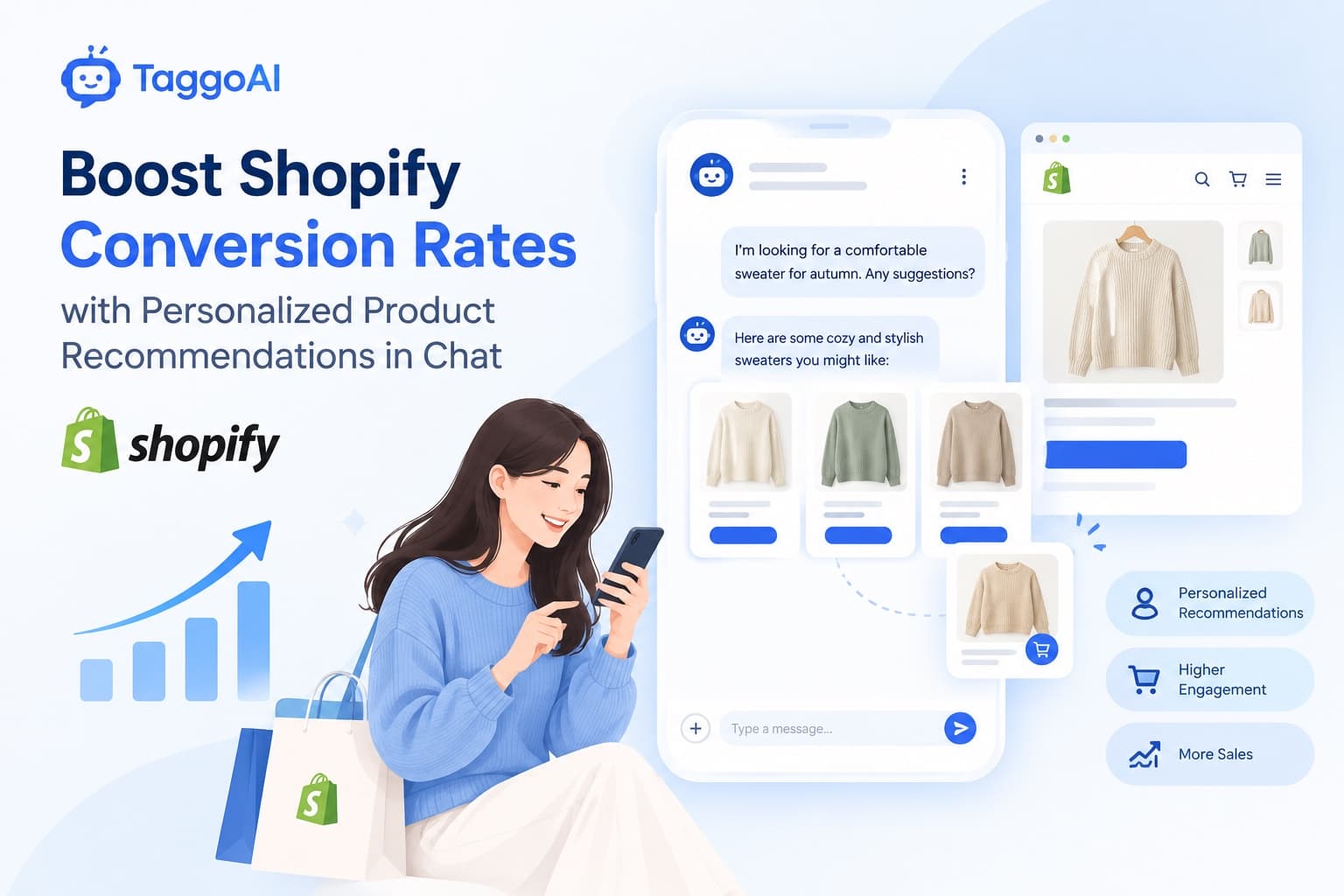
What Is Conversational Commerce? Why Shoppers Chat Before They Buy
Online shopping is convenient, but product pages and checkout forms cannot answer every question a customer may have. Is this the right size? Will it arrive before a trip? Which model fits my needs? For many shoppers, a conversation is the fastest way to resolve uncertainty.
This is the idea behind conversational commerce: using messaging, chat, and conversational assistants to help customers discover products, make decisions, get support, and—in supported experiences—complete a purchase.
What Is Conversational Commerce?
Conversational commerce combines commerce with real-time or asynchronous conversations. It can happen through website chat, messaging apps, social media direct messages, or AI assistants. The conversation may be handled by a human, an automated flow, or an AI assistant with human support available when needed.
It is broader than a chatbot. A chatbot is one possible interface; conversational commerce is the customer journey built around conversation.
Why Customers Want to Chat Before Buying
They need confidence. Product descriptions rarely cover every individual question. A quick exchange can clarify size, compatibility, materials, or use cases.
They want guidance. When there are many options, a conversation can help narrow the choices based on the customer’s stated needs.
They expect timely answers. A shopper who is ready to buy may not want to wait until the next business day for a basic policy answer.
They prefer familiar channels. In many Southeast Asian markets, messaging and social platforms play an important role in everyday communication. Customers may naturally use those same channels to ask businesses questions. However, habits vary by country, audience, product category, and age group; businesses should validate the pattern with their own customers rather than assume everyone prefers chat.
They want support after checkout, too. Delivery questions, returns, and product usage concerns continue after the payment is complete. A connected conversation experience can help make support more consistent.
Conversational Commerce vs. Traditional Ecommerce
Traditional ecommerce often asks shoppers to navigate categories, read product pages, and complete checkout independently. Conversational commerce adds a guided layer where customers can ask questions in their own words.
The two approaches are complementary, not competing. A clear product page and fast checkout remain essential. Conversation is especially valuable when customers need reassurance, comparison, recommendations, or help with an exception.
The Role of AI in Conversational Commerce
AI can help scale conversations without requiring a person to type every routine answer.
- Product discovery: Ask a few clarifying questions and suggest relevant products from an approved catalog.
- Pre-sale support: Explain features, sizing, shipping, and return policies.
- Always-on assistance: Respond to common questions outside staffed hours, when the service is available.
- Agent assistance: Summarize conversations and draft replies for staff to review.
- Conversation insights: Identify repeated questions and common points of confusion that may need better product pages or policies.
These capabilities depend on data quality, integrations, and permissions. Real-time inventory, order status, checkout changes, and refunds require authorized system access; an AI model alone cannot verify them. Good systems make uncertainty visible and offer a human handoff.
A Simple Conversational Commerce Journey
- Discover: A shopper arrives from search, social media, an advertisement, or a referral.
- Ask: They ask about a product, fit, price, delivery, or compatibility.
- Clarify: The assistant asks a useful follow-up instead of guessing.
- Recommend: It presents relevant options with accurate details and links.
- Convert: The customer continues to the store’s secure checkout.
- Support: After purchase, the business provides help with delivery, usage, returns, or other questions.
Each step should feel natural. Avoid forcing shoppers into a conversation when they would rather browse independently.
How to Get Started
Start with real questions. Review support conversations and identify the questions that repeatedly delay purchase or consume staff time.
Build a trusted knowledge base. Include accurate product data, shipping details, return policies, and promotion terms. Assign an owner to keep them current.
Choose the right channels. Start with the website and the messaging channels your customers actually use. Verify integration availability and platform rules before committing to a channel strategy.
Set clear AI boundaries. Instruct the assistant to answer from approved sources, avoid unsupported claims, and escalate sensitive or account-specific requests.
Measure business outcomes. Track product-question resolution, response time, human handoffs, customer satisfaction, assisted conversion, and post-purchase support quality. Use a consistent measurement method and compare against a meaningful baseline.
How TaggoAI Fits In
TaggoAI can support businesses exploring AI-assisted customer conversations, knowledge-based answers, and connected customer workflows. The precise experience depends on the features and channel integrations enabled in your workspace. A sensible first step is to automate common, low-risk questions while keeping human support available for decisions that need judgment or verified customer data.
The Future Is Conversational—and Still Human
Conversational commerce is not about replacing every product page with a chatbot. It is about giving customers a useful way to get answers at the moment they need them. The strongest experiences combine clear ecommerce journeys, reliable information, helpful AI, and people who can step in when the situation calls for it.
For businesses, the opportunity is straightforward: remove friction from the buying journey, learn from customer questions, and make every conversation more useful.
Ready to elevate your customer experience?
Deploy intelligent AI agents for your business in minutes.

