Shopify Abandoned Cart Recovery: 3-Message Sequence
Build a Shopify abandoned cart recovery sequence in 3 messages: timing, copy templates, discount rules and consent tips that win back carts without spamming.
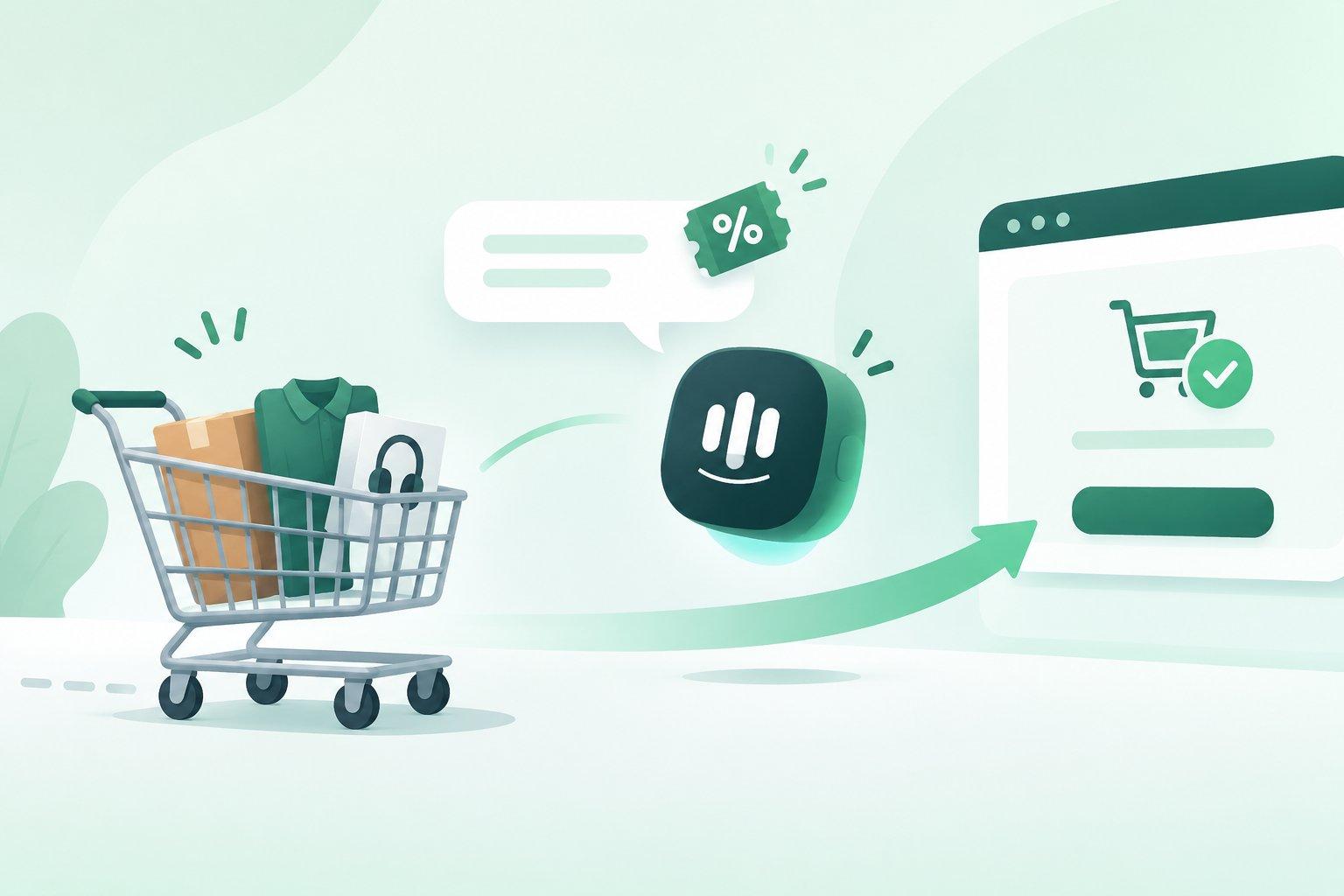
Abandoned Cart Recovery on Shopify: A 3-Message Sequence That Doesn't Feel Like Spam
Short answer: a good abandoned cart sequence on Shopify uses no more than three messages: a helpful reminder within the first hour, a "can I help?" message about a day later, and a final nudge with a personal, time-limited offer. It stops the moment the customer buys, respects consent and quiet hours, and never trains shoppers to wait for a discount.
Most store owners know abandoned carts are lost revenue. Fewer have a recovery flow that customers actually appreciate. This guide walks you through the timing, the copy and the guardrails.
Why shoppers abandon carts (and why it matters for your messages)
Before writing a single reminder, think about why someone left. Common reasons include:
- They were just browsing or comparing prices.
- Shipping costs or delivery dates surprised them at checkout.
- They had a question (size, compatibility, return policy) and nobody answered.
- They got distracted: a phone call, a meeting, a crying toddler.
- Payment friction: a missing payment method or a failed card.
Notice that only some of these are solved by a discount. Many are solved by information or a quick answer. That's why the best recovery sequences lead with help, not coupons.
The 3-message sequence
Message 1: The friendly reminder (30–60 minutes after abandonment)
Goal: catch distracted shoppers while intent is still warm.
"Hi Sam, you left the Linen Throw (Sand) in your cart. We've saved it for you. Want to pick up where you left off? [Return to cart]"
Tips:
- Mention the exact product, ideally with an image.
- Keep it short. No discount yet.
- Include a one-tap link back to the cart.
Message 2: The helpful check-in (around 24 hours later)
Goal: remove the objection that stopped them.
"Hi Sam, quick check: any questions about the Linen Throw? Happy to help with sizing, care instructions or delivery times. Just reply here."
Tips:
- Invite a reply. This is where a chat channel beats a one-way email: a customer can ask "Will it arrive before the 20th?" and get an answer immediately.
- Add one useful detail, like your return policy or estimated delivery window.
Message 3: The final nudge (around 48–72 hours later)
Goal: give a fair reason to decide now.
"Last reminder from us: here's a 10% code just for you, valid for 7 days: SAM-LINEN10. If now isn't the right time, no worries. We won't message you about this cart again."
Tips:
- Make the code unique to the customer and time-limited, so it doesn't leak to coupon sites.
- Say clearly that this is the last message. It builds trust.
- Keep the discount modest. Set a ceiling so automation can never give away your margin.
Guardrails that keep recovery from becoming spam
- Stop on purchase. If the customer buys through any channel, every pending reminder must be cancelled. Nothing is more annoying than "You forgot your cart!" after you already paid.
- Respect consent. Only message people who agreed to receive messages on that channel. On WhatsApp, business-initiated messages also require templates approved by Meta.
- Quiet hours. Don't send reminders in the middle of the night in the customer's time zone.
- Daily limits. Cap how many marketing messages one customer can receive per day across all your flows.
- Cap the discount. Decide a maximum (for example, never more than a set percentage) and enforce it in software, not in a spreadsheet.
- One sequence per cart. If someone abandons three carts in a week, don't send them nine messages.
Choosing the channel: email, chat or WhatsApp?
- Email is universal and good for richer content, but often read hours later.
- On-site chat and Messenger/Instagram work well when the customer was already chatting with you.
- WhatsApp is popular in many markets and feels personal, but it requires opt-in and approved templates.
A practical approach: use the channel the customer already gave you consent for, and keep the conversation in a shared inbox so that if they reply with a question, a person or AI can answer in context.
Measuring whether it works
Track a few simple numbers each month:
- Recovered orders and revenue attributed to the sequence.
- Which message drives most recoveries (if it's always message 3, you may be over-relying on discounts).
- Reply rate to message 2. Replies reveal the real objections in your store, which you can then fix on product pages.
- Opt-out rate. If it rises, your sequence is too aggressive.
Avoid comparing yourself against "industry average" recovery rates you see quoted online. They vary widely by niche, price point and channel. Compare against your own baseline instead.
How TaggoAI helps
TaggoAI for Shopify (install "Taggo: AI Chatbot" from the Shopify App Store) includes abandoned cart recovery built around these guardrails:
- Up to 3 reminder messages per abandoned cart.
- A personal discount code for each customer, by default 10% and valid for 7 days, with a maximum cap of 30% so automation can't over-discount.
- Automatically stops when the customer has purchased.
- WhatsApp messages are only sent after Meta approves your templates, customer consent is respected, and there are quiet hours and daily message limits.
- Message templates are available in English, Hindi, Indonesian, Thai and Vietnamese.
- When a shopper replies with a question, the AI chatbot answers 24/7 from your store data, and hands off to your team with a summary if it isn't sure.
- A shared inbox, CRM and segments keep every conversation in one place, and reports show revenue Taggo helped bring in.
You stay in control: the AI proposes, and the store owner approves changes to rules.
FAQ
How many abandoned cart messages should I send?
Three is a sensible maximum for most stores. More than that tends to increase opt-outs without adding many sales.
Should the first message include a discount?
Usually not. Many shoppers just got distracted or had a question. Save a modest, personal offer for the final message.
Can I send abandoned cart reminders on WhatsApp?
Yes, if the customer opted in. Business-initiated WhatsApp messages need templates approved by Meta, and you should respect quiet hours.
What if the customer buys in-store or through another channel?
Your system should cancel any pending reminders as soon as a purchase is recorded. Check this before going live.
Conclusion
Abandoned cart recovery works best when it feels like good service: a timely reminder, a genuine offer to help, and one fair final nudge. Add strong guardrails (stop on purchase, consent, quiet hours, discount caps) and you'll recover sales without burning trust.
Ready to try it? Install Taggo: AI Chatbot from the Shopify App Store and start a 14-day free trial to set up your 3-message recovery flow in minutes.
Ready to elevate your customer experience?
Deploy intelligent AI agents for your business in minutes.

