How Anomaly Detection in Livestream KPIs Prevents Revenue Loss: The 2026 E-Commerce Guide
Learn how real-time AI anomaly detection protects livestream revenue. Discover how automated monitoring tracks GMV velocity, viewer drop-offs, stockouts, and stream lag to alert production teams before thousands of dollars in live sales are lost.
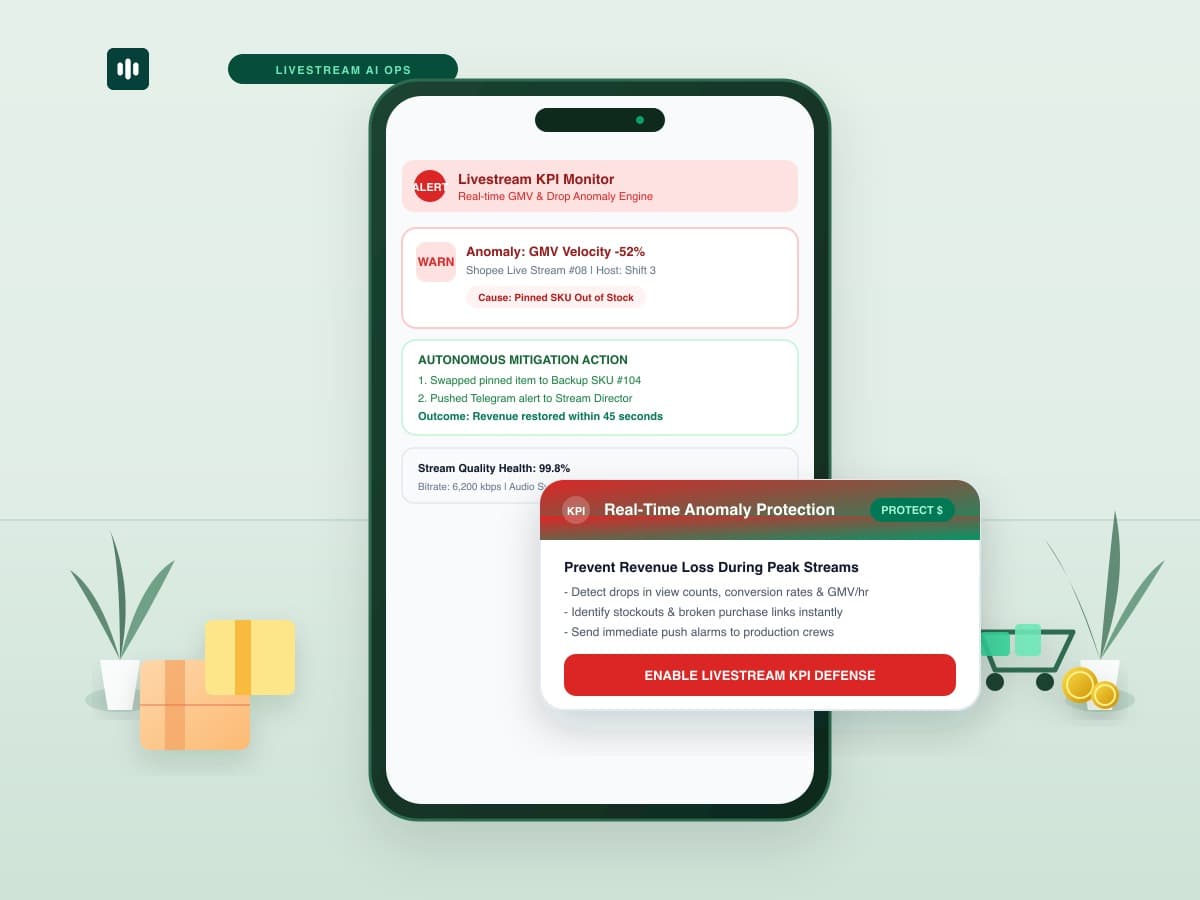
The High-Stakes Reality of Live Commerce: During a high-velocity mega sale stream generating $1,000+ per minute, a single technical hiccup—such as a pinned SKU selling out without the host noticing, an audio delay, or a broken checkout link—can cost a brand over $20,000 in lost revenue in less than 20 minutes. Real-time AI Anomaly Detection acts as an automated studio watchdog, catching and fixing operational errors in seconds.
Livestream commerce on TikTok Shop, Shopee Live, and Instagram has evolved into high-pressure television production. Hundreds of orders surge every minute, viewer comments scroll faster than human eyes can track, and hosts are completely focused on energy and presentation.
When problems arise mid-stream, human moderators often take 15 to 30 minutes to realize something is wrong. By that time, thousands of frustrated viewers have swiped away. Here is how modern e-commerce enterprises deploy AI KPI Anomaly Detection to safeguard live revenue.
1. The 4 Silent Killers of Livestream Revenue
1. Pinned SKU Out-of-Stock (Stockout Lag)
The host spends 12 minutes passionately demonstrating a hero jacket that sold out in the first 2 minutes. Viewers clicking the pin see "Out of Stock" and leave without buying. AI anomaly detection identifies zero inventory on pinned items within 5 seconds and automatically prompts the producer or swaps to a secondary variant.
2. Sudden Comment-to-Order Velocity Crash
Viewer counts remain high, but order creation abruptly drops by 80%. This almost always indicates an expired coupon code, payment gateway timeout, or broken redirect URL. AI triggers an immediate alarm to test checkout rails.
3. Audio Desynchronization & Video Bitrate Stutters
A 500ms audio-video lag causes a 40% immediate drop in live engagement. AI stream watchdogs monitor ingest feeds continuously to flag packet loss and bitrate drops before viewers drop off.
4. Negative Sentiment Spike in Chat
Spam bots, shipping complaints from prior orders, or customer confusion can derail a broadcast. Natural Language Processing (NLP) detects negative sentiment spikes and alerts moderators to pin FAQ clarifications.
2. Performance Comparison: Manual Stream Watchers vs TaggoAI Anomaly Engine
| Operational Capability | Manual Studio Monitoring | TaggoAI Live Anomaly Engine |
|---|---|---|
| Stockout Detection Speed | 8 – 20 Minutes | < 5 Seconds (Instant notification) |
| GMV Velocity Anomaly Trigger | Only noticed after stream ends | Real-time alert within 45s of drop |
| Chat Sentiment & Spam Shield | Manual comment scrolling | Automated NLP filtering & auto-replies |
| Multi-Stream Simultaneous Oversight | 1 operator per stream | Monitors 50+ concurrent streams on 1 screen |
3. Incident Response Playbook for Livestream Directors
Step 1: Auto-Switch Pinned Product Pins
When primary inventory hits zero, the AI automatically shifts the live shopping basket pin to the next best-selling colorway or bundled SKU.
Step 2: Instant Telegram / Slack Production Ping
Alerts are sent directly to the stream floor manager's smartwatch or tablet with exact corrective action (e.g., "Restock SKU #12 or tell host to switch to SKU #14").
Step 3: Automated DM Recovery to Inquiring Viewers
For viewers who commented wanting the sold-out item, AI automatically sends a direct message offering a pre-order discount or waiting list reservation.
Protect Your Livestream Revenue with TaggoAI
Stop losing thousands in live sales to invisible technical glitches and inventory delays.
Enable Livestream MonitoringReady to elevate your customer experience?
Deploy intelligent AI agents for your business in minutes.